
Alison Rendall's Blog
Shetland Born & Bred

Summer 2026 update
Hubert has single handedly managed to clip around 500 sheep, against all the odds including a wet summer! The clip is now finished, and so we have two new batches in process. A white batch is being spun as we speak and will hopefully be on the shelves in about 4 months’ time. A coloured batch (Shetland Black, Moorit, Stekket and Sea Saat) is being sorted right now. It never ceases to amaze me how striking the natural colours are when you see the fleece lying in large mounds during the sorting process.
Our three new dyed shades are doing well.
Gronska is a dark forest green; the name coming from the old Norse for lush green patches in the landscape. This shade blends well with Deepdale, Whaalwick and Mousawater.
Hedder Berry is a rich and zingy purple; the name comes the purple berries that grow in the heather here in Shetland. The berries are sharp and acidic but as children we gathered and ate them thinking we had found great riches! This shade blends well with Yatlen, Linga and Klingrabanks. It also works well with the blues.
Sky Gaa is pale peach; a Gaa is the Shetland word for a halo around the sun or the moon. In the past, before modern weather forecasting, Shetlanders often read signs in the sky to predict future weather. A Gaa or a rainbow spot of colour near to the sun usually indicated some change in the weather. This shade blends well with Ayre, Sea Saat and Tactigill and is designed to offer a good contrast to the darker shades.
The Eksis Mitts and Da Fish Hat are our two new kits available.
Eksis Mitts are a colourful and fun knit to remind us of those summer days and bright yellow dandelions. Shetland has lots of species of dandelions but there are a couple of native species that are only found in our islands and nowhere else! Eksis is the Shetland name.
Da Fish Hat is a fun design inspired by Shetland’s nautical heritage. The blue shades in this kit have all been inspired by the colours of the sea. Take Deepdale for an example with its turquoise waters!
We are thrilled to announce that our first finished Murrister Wirset knitwear items are now available on the website! Providing finished pieces has been a long-held dream, but meeting demand as a solo hand-knitter was always a challenge. Now, in partnership with my friend Christine, we are proud to introduce the Murrister Snood.
Each piece is individually crafted using a traditional hand-frame knitting machine, a historic mechanism that bridges heritage skill and artisanal precision.
The hand frame knitting machine became the backbone of domestic textile production in the 1960’s and still holds a special place in my heart. I remember my father, a fisherman, using this exact type of machine during stormy days when he couldn't go to sea. He would knit the bodies for traditional yoke jumpers, and my mother would then handknit the Fair Isle yoke. It feels right to celebrate the hand-frame knitting machine today, honouring its vital place in the rich history and development of Shetland knitting.
The Murrister Snood is made exclusively from our own brand Murrister Wirset yarn, which is spun from 100% hand-selected native breed Shetland wool, the resulting fabric is exceptionally lightweight, beautifully uniform, and incredibly soft against the skin.


Murrister Wirset new Natural colours! 12/04/26
We’ve just introduced three new colours to our Murrister Wirset natural range to make five altogether!
Shetland Black, Moorit and a natural dark grey we’ve called ‘Stekket’, adding to our existing Paet Bank and Sea Saat.
There are eleven defined main whole colours in Shetland sheep, with many shades and variants in between. Some of these shades are less common as white is now the predominant colour of Shetland sheep. Historically, there has been a shift to white wool to meet the demand of industrial wool markets who prefer white because it is the easiest colour to dye.
In the past, coloured flocks were important at Murrister as the women folk would spin their own wool and needed all the colours to produce high quality, coloured knitting including Fair Isle. Then things changed as wool was sent to Scottish mainland for processing and white wool became more economically desirable than coloured wool. Last winter, Hubert obtained a Shetland Black ram and a grey ram so we are excited to see the colours of the new lambs which will be making an appearance very soon. It is interesting to see the flock diversifying with the colours becoming popular again.
Shetland Black is a natural black but looks like a very dark brown. Moorit is natural reddish brown. It is a Norn-derived word literally meaning ‘moor red’. In Shetland we say stekket mist for a day of dense fog, so this was the chosen word for the new grey colour. Natural undyed white is cream coloured, less harsh than a dyed white. We named this one ‘Sea Saat’.
I hope you enjoy the new Natural range.
There are also three new dyed colours to come . . . more news about them very soon!
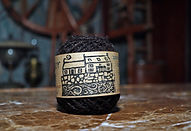


Murrister Farm Tour 26/03/26
We were lucky with a sunny day at the end of March for our first Murrister Farm tour. We welcomed Jolene from Island Vista with her guest Jacalyn. They joined us on a sheep feeding run and got to see the native breed Shetland sheep, both ewes, rams and one year old lambs. Some of the flock have a gene pool from Foula so have interesting colours. Hubert gave us a sheep shearing demonstration making it look a lot easier than it is! Jacalyn was interested to see the high quality of Shetland fleeces in a variety of colours.
From there we had a look in the byre to see the all the new calves just born to their Limousin mothers. We fed them with a traditional crop of Shetland kale grown on the farm.
Our guests took an interest in all the place names where the Shetland sheep graze. We pointed out the knows called black Keostrin and green Keostrin, the crofts called Novazembla and Timirie as well as the area of peatland restoration called Murnavoda. I explained the importance of remembering these place names rather than losing them through time and progress. In the past people moved around over large areas and covered considerable distances either looking for animals or transporting animals. Sheep were kept in the hills the whole year round and there were fewer fences so therefore they roamed greater distances. Other animals such as kye, ponies and pigs were often kept at home in the wintertime but were driven to the hills in summertime to graze allowing the crops in the haemtoons to grow. It was important then that every spot on the hills had a distinctive name so that the places where sheep or cattle were grazing could be described. I use these names in my knitting designs to help keep Shetland words and place names alive.


Murrister Farm Peatland
An interesting short film featuring Hubert and I. We talk about Murrister farm and the peatland restoration that has been happening lately. The film shows some of the effort that is going on behind the scenes to ensure our Murrister Wirset is of the highest quality. This is partly due to peatland being the most suitable landscape for Native Breed Shetland Sheep!

12/10/25
Fair Isle Knitting Tradition
Book Launch
My new book “Fair Isle Knitting Tradition” was launched on Thursday 2nd October at Lerwick Town Hall. It was an informal gathering with family, friends and visitors to Shetland here for Shetland Wool Week. We all had a glass of fizz to toast the new book, home bakes and a mingle. A few members of the Junior Up Helly Squad joined us for a surprise visit, and this added to the occasion.
The book begins with a history of Fair Isle knitting and a “how to” section, followed by fourteen designs which increase in technical difficulty as the book progresses. This ensures that there is something for everyone whether you are experienced or new to Fair Isle knitting. Once I had decided on the headings for the “how to” section it was a case of writing down everything I knew about the Shetland way to do things. The book is very much about what I have learned over the years and the techniques I frequently use. Working on the fourteen patterns was a pleasurable experience as I find the design work the most enjoyable.
Signed copies of my book available HERE
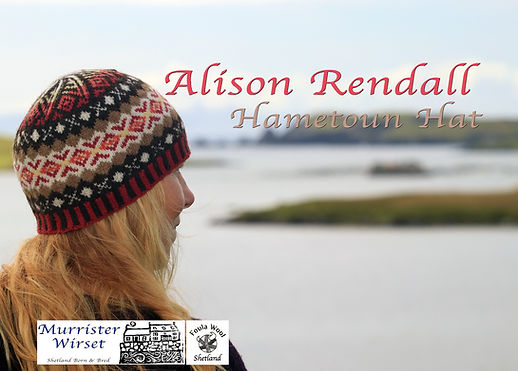
Hametoun Hat

In other news, I’ve been working on a collaboration with Foula Wool in a unique celebration of Foula and Shetland sheep. The Island of Foula has its own indigenous native population of Shetland Sheep.
We are both proud of our products and decided to work together on this special collaboration to promote two 100% native yarn producers from Shetland’s Wastside!
The Hametoun Hat is the result. We did a yarn swop, so my kit has a ball of native Foula Wool and their kit has a ball of Murrister Wirset! The kit is in two exciting colourways and the Murrister Kit is now available on my website.
Hametoun is a settlement of scattered crofts in the south end of Foula.
For more information about Foula Wool: https://foulawool.co.uk
The Murrister Wirset Hametoun Hat is available HERE

21/9/25
I’m happy to say that the Murrister Wirset kits and yarn have been proving popular. Thanks to all of you for your kind words about the product and of course your purchases. Feedback I’ve had includes things like:
“a good strong yarn that does not split”
“a joy to knit with”
“We’ve created a short video looking at how I came to choose the colours for batch 1 and how I best used them in each of the designs.
Batch two has been spun but is delayed due to equipment problems with the dyers. Unfortunately, it is likely that I will run out of some of the popular products before we have our stock replenished. Please bear with me during the wait.
I am also still trying to overcome problems after Brexit selling to EU countries and problems with import taxes sending to US. Once my stock levels have increased, I intend to address both issues. Again, thanks for your patience during the wait!
Lots of you are asking me more about the names I’ve used both in the yarn and the designs so that will be a topic in a future film. Looking forward to explaining more about our Shetland words.

16/6/25
Murrister wirset - Shetland born and bred.
Murrister wirset is a collaboration between myself (Alison Rendall) and local crofter Hubert Moar. Hubert and his family before him have farmed Shetland sheep at Murrister for many generations. His flock is expertly managed and as a result his fleeces are of the highest quality. As I watched him shear his sheep, I became interested in learning more about the process from sheep to finished ball of yarn and so Murrister Wirset was born!
I’m delighted now to share with you the finished results. The wirset (yarn) is unbleached and treated as naturally as possible throughout the processing. It is spun to a fine 2/16ysw, the equivalent of 2 ply jumper weight, perfect for fine gauge Fair Isle knitting. Available now in ten dyed colours and two natural undyed colours.
I enjoy being able to knit with yarn that comes from the sheep that I see everyday in the fields that surround me. It is a joy to be able to knit with my own yarn in my own chosen colours from those very sheep. I hope you also enjoy knitting with my own 100% native breed Shetland yarn.
Please also see the short film below for a look behind the scenes of Murrister Wirset.
